
By David Ochonu
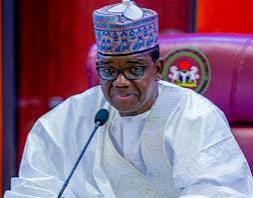
A resurfaced video showing Dr. Bello Matawalle, prior to his appointment as Minister of State for Defence, allegedly defending certain bandits during his time as Governor of Zamfara State has once again stirred intense public concern about the penchant for resorting to media trial and vilification of public office holders in service of those who have nothing good to offer the country.
True to the intention of those behind this latest perverted plot, social media went abuzz with condemnation and misplaced demands for the ouster of Matawalle, reactions and demands that ignore the complexity of Nigeria’s security landscape, both past and present. They also omitted to reckon with context and changes that have occurred since the video was made.
When Matawalle became Zamfara State Governor in 2019, thestate was engulfed in one of the most brutal insurgencies across the country. Mass abductions, killings, and widespread lawlessness had rendered military solutions insufficient. In that precarious context, Matawalle engaged in a “dialogue-driven” approach, which some detractors have now managed to cast as controversial. Whereas independent observers noted that over 1,000 abductees were released through these efforts, disarmament and calm were significantly restored. It is fashionable for critics to now say this approach towards bandits emboldened criminals, but such assertions fail to acknowledge the deeper policy dynamics at the time with the most imperative outcome at that time being saving lives when options were limited.
Today, as Minister of State for Defence, Dr. Matawalle has led the transformative renewal of Nigeria’s security architecture. Vanguard reports that, under his leadership, the Defence Industries Corporation of Nigeria (DICON) was restructured in 2023 into a public-private model to produce small arms, protective gear, and drones locally. Citing official data, Abiola Yusuf, chair of the Nigeria Anti-Corruption and Integrity Movement, confirmed that over 8,000 terrorists were neutralised, 11,600 insurgents arrested, and 10,000 weapons recovered in 2024 operations. Mobilising the military and intelligence services, Matawalle personally visited Sokoto in September 2024 to coordinate decisive “decapitation” operations that dismantled bandit enclaves.
Independent civil society organisations have recognised these contributions. Muhammad Abdullahi of the Northern Concerned Citizens Group described Matawalle as “a disciplined, focused and result-oriented leader whose efforts have renewed hope and confidence within the security establishment and among Nigerians.” Similarly, Arewa Think Tank Forum convener Alhaji Abdul Malik stated that Matawalle’s “experience as a former governor of Zamfara State … positions him well to navigate Nigeria’s complex security landscape” and praised his role in “enhancing military operations, improving intelligence gathering, and fostering collaboration among security agencies.”
When 25 girls were abducted from a girls’ school in Kebbi State in November 2025, security analysts under the Keep Nigeria Safe Initiative (KNSI) affirmed confidence in Matawalle’s leadership. They noted his track record in rescuing thousands of students, most notably from Jangebe in 2021, and urged his full empowerment.
The media has also acknowledged Matawalle’s hands-on leadership style. In The Nation, Segun Ibrahim reported that he “wasted no time …going beyond the comfort of Abuja’s bureaucratic confines, and marching into the treacherous zones … inspiring soldiers, evaluating war plans directly.” His personal example, including wearing military fatigues, was seen not as showmanship but as morale-boosting solidarity.
Meanwhile, as Nigeria pursues a major security cooperation with the United States, Washington has pledged intelligence-sharing, technical support, and accelerated provision of equipment, moves facilitated by Matawalle’s advocacy for improved force readiness, surveillance, and operational efficiency. Mallam Nuhu Ribadu, the National Security Adviser, led the Nigerian contingent in Washington to formalise the Joint Working Group Agreement.
Does his record provide a full pass? No. But we must hold him accountable for his current actions, not condemn him for circumstances that shaped his early choices. At the peak of crisis in Zamfara, Matawalle deployed both “carrot and stick”: dialogue, mass disarmament, curfews, market closures, and telecom blackouts gradually gave way to stringent kinetic operations. Governance demands difficult decisions in dire situations. Today, as minister, he remains an active architect of reform, not a relic of past missteps.
If we are serious about defeating bandits, terrorists, and kidnappers, Nigeria needs leaders who evolve, innovate, and stand firmly with our soldiers and communities. The security crisis requires unity and strategic engagement; not symbolic outrage aimed at yesterday’s decisions and utterances. Accountability must focus on what is done today and tomorrow. If Matawalle falters now, let us speak up, but let us not sacrifice hard-won progress for partisan theatrics. The insecurity plaguing Nigeria demands solutions not blackmailing those doing their best to tame the monster.
Ochonu is a pro-democracy activist writing from Abuja.