
Kano, Five Others Rated Very High-Risk States for Electoral Disinformation – IPC

Kano, Five Others Rated Very High-Risk States for Electoral Disinformation – IPC

Spread the love


Kano, Kaduna, Zamfara, Borno, Plateau and Benue have been identified as states facing very high risks of electoral information manipulation ahead of the 2027 general elections.

This is contained in an electoral information threat map presented by the International Press Centre (IPC) and its partners.

The Executive Director of IPC, Dr. Lanre Arogundade, disclosed this on Wednesday in Kano while delivering a welcome address at a two-day capacity-building engagement for the leadership of the Independent National Electoral Commission’s (INEC) Voter Education and Publicity (VEP) department on Electoral Trust, Effective Communication, Legal Literacy and Voter Engagement.

According to him, the threat map was presented at a national summit on Artificial Intelligence (AI), Foreign Information Manipulation and Interference (FIMI), and Electoral Information Integrity held in Abuja on November 2 and 3.
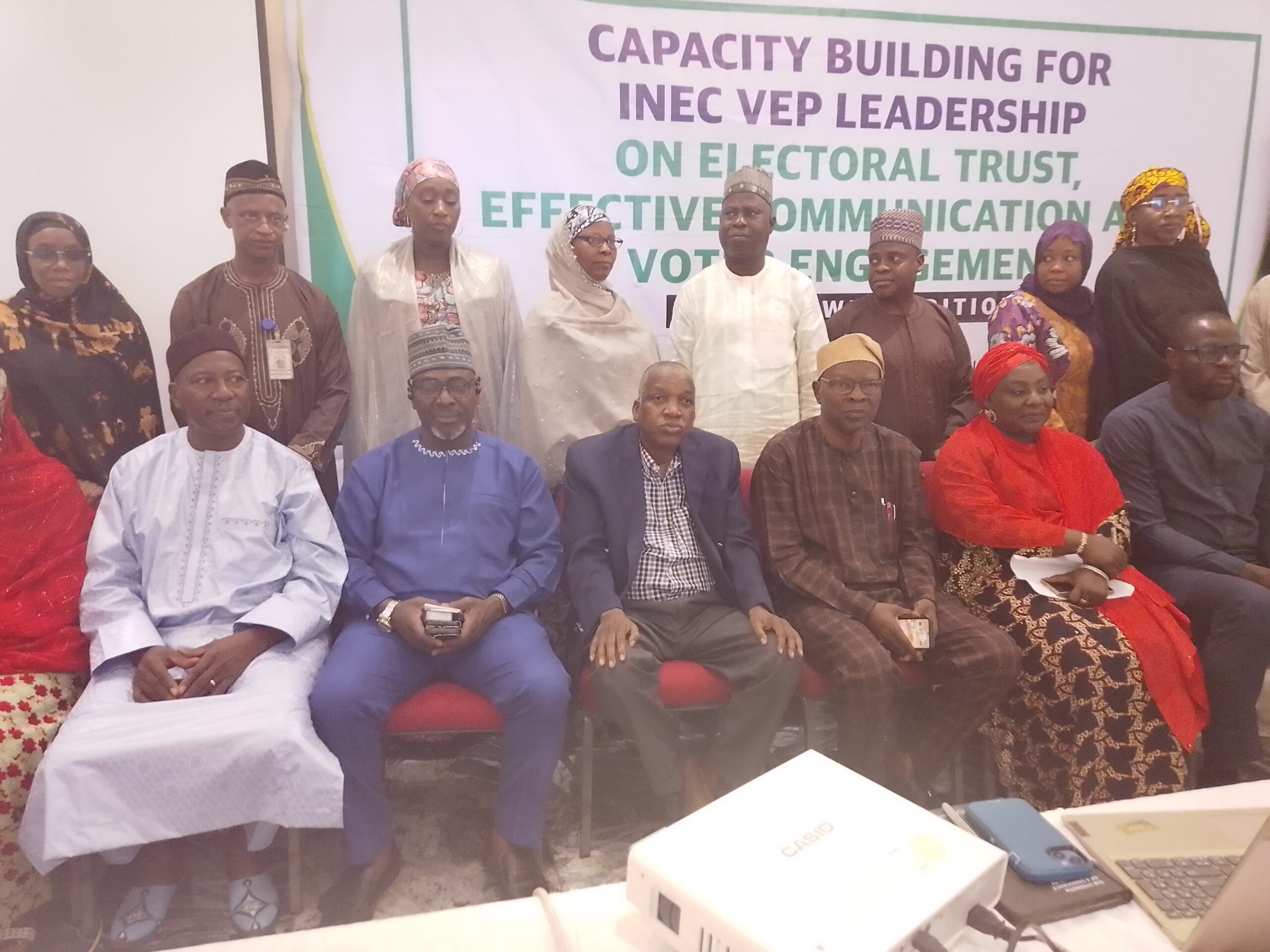
 

Group Photograph with Participants

Arogundade identified Katsina, Sokoto, Kebbi, Yobe and Adamawa, among others, as high-risk states, while Jigawa and some other states were classified as facing elevated risks. He warned that emerging technologies had made electoral disinformation increasingly sophisticated, observing that voices could be cloned within minutes and election result sheets falsified within seconds through AI-generated and synthetic media. He urged INEC’s VEP officials to strengthen their capacity to identify, verify and counter false information before it undermines public confidence in the electoral process.

He said, the growing controversies surrounding electoral processes, legal interpretations and competing public narratives made effective communication essential to building trust in INEC ahead of the 2027 elections. He stressed that VEP officials occupied a critical position in the information chain between the commission and the electorate, warning that inaccurate explanations of electoral laws or voting procedures could damage institutional credibility.

The programme, organised by IPC and the Centre for Media and Society (CEMESO) under Component 4: Support to Media of the European Union Support to Democratic Governance in Nigeria (EU-SDGN) programme, is designed to strengthen the communication, legal literacy, crisis management and fact-checking capacities of INEC officials.
On his part, the Kano State Resident Electoral Commissioner (REC), Zongo Abdu, disclosed that the Independent National Electoral Commission (INEC) is strengthening the capacity of its personnel across all cadres to ensure they are adequately prepared to discharge their responsibilities and uphold the integrity of the electoral process ahead of the 2027 general elections.
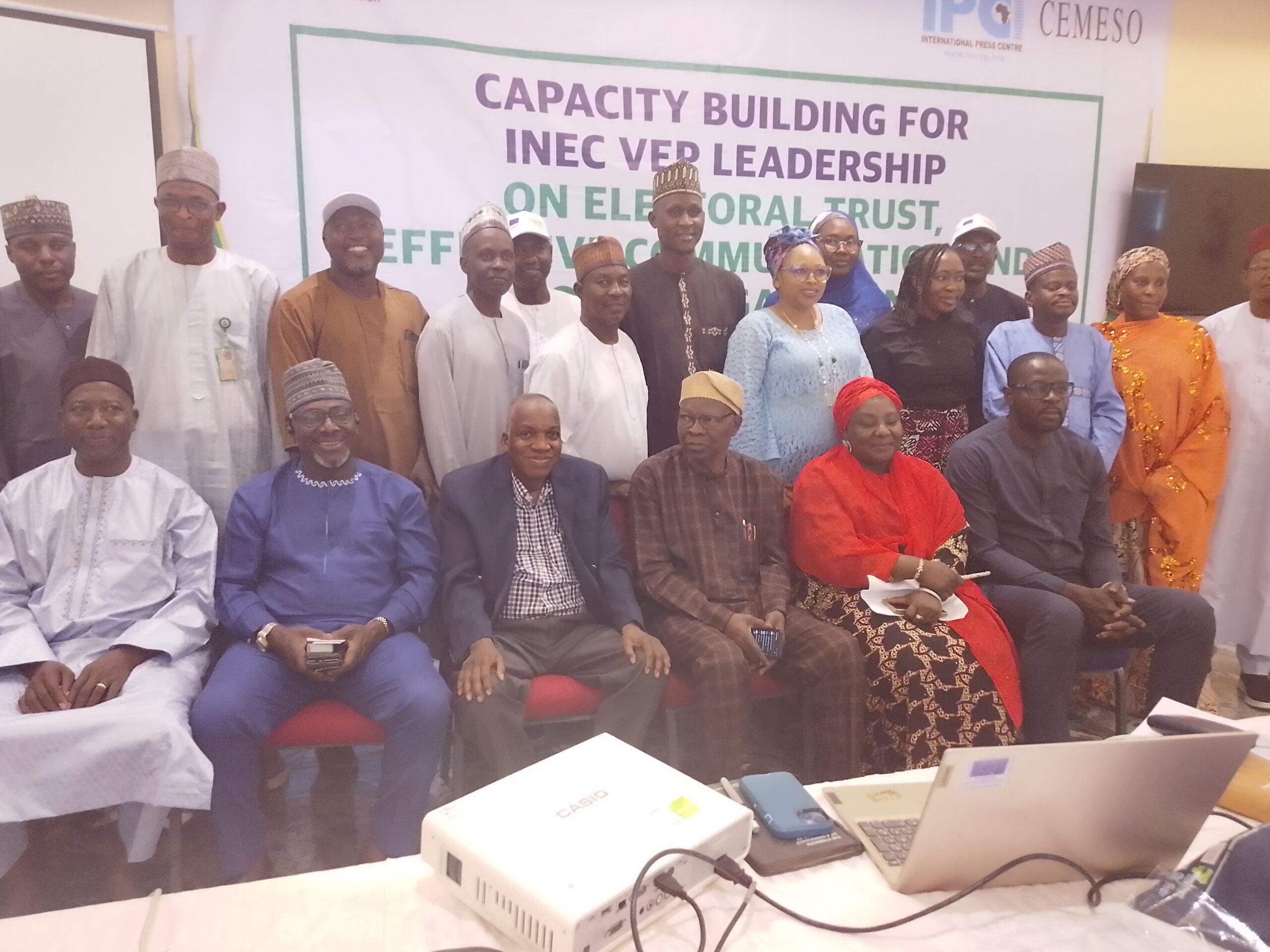
Another group Photograph from the event
Abdu described the workshop, organised in collaboration with the International Press Centre (IPC) and the Centre for Media and Society (CEMESO), with funding support from the European Union, as significant to the commission’s preparations. He said the partnership would provide opportunities for knowledge sharing, exchange of insights and exposure to international best practices in election management. He identified public trust as a critical foundation for credible elections, stressing that building confidence in the electoral process must begin long before election day.
Furthermore, the REC said INEC was continuously reviewing past elections, learning from previous challenges and strengthening its operational capacity, rules, deployment strategies and logistics to improve electoral performance adding that the new Electoral Act had provided additional leverage for the commission to enhance its operations even as the Commission was conducting continuous research and capacity development to ensure adequate preparedness, expressing optimism that the 2027 general elections would be free, fair and credible.
In the same vein, the Executive Director of the Centre for Media and Society (CEMESO), Dr. Akin Akingbulu, also emphasised the need for strengthened capacity of the Independent National Electoral Commission’s (INEC) Voter Education and Publicity (VEP) Department which will enhance electoral trust, effective communication and citizen engagement ahead of the 2027 general elections.
He explained that CEMESO and the International Press Centre (IPC) had been working closely on election-related issues, particularly media communication, adding that the VEP Department occupied a strategic position in helping INEC communicate effectively with citizens and build confidence in the electoral process.

Spread the love
News